

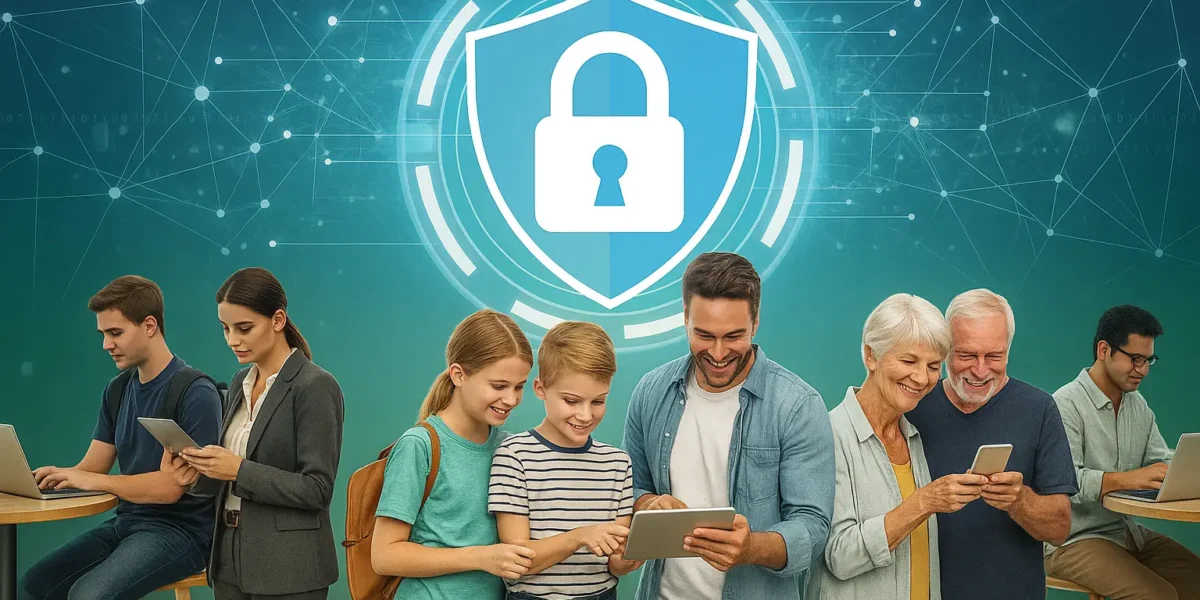
- Cybersecurity isn’t only for IT teams. If you use email, online banking, or social media, you are already part of it.
- Most online harm starts with an ordinary, avoidable mistake, like a reused password or a convincing scam message.
- You are not too small to be a target. Most attacks are automated and simply look for the easiest way in.
- Staying safe is about habits, not technical skill, the same way locking your door protects you without any training.
- A few steady actions protect your money, privacy, and identity. You don’t have to do them all at once. One change today already helps.
When most people hear the word “cybersecurity,” they picture IT teams in a server room, writing code to keep hackers out. It sounds like something that belongs to specialists. The reality is far more personal. If you use email, log in to your bank, shop online, or scroll through social media, you are already living inside the cybersecurity story, whether you think about it or not.
Consider an ordinary day. You check your inbox, glance at your bank balance, order dinner, and catch up on messages. Every one of those actions leaves a digital trace, and every trace is a small opportunity for someone who is looking for one. That is why cybersecurity has stopped being a niche subject for experts. It has quietly become part of everyday safety, much like looking both ways before you cross the road.
Why it matters to everyone
The risks most of us face online are rarely dramatic. They are usually ordinary mistakes waiting to happen. A message that looks like it came from your bank turns out to be a scam. A password you have reused for years becomes the single key that unlocks every account you own. The free Wi-Fi at a café quietly exposes what you are doing to a stranger sitting nearby.
The consequences, though, are very real. Money can vanish from an account. An identity can be stolen and used in your name. Private messages and photos can end up somewhere you never intended. These things do not only happen to large companies. They happen to ordinary people, every single day. The encouraging part is that most of them are preventable with a little awareness.
But who would target someone like me?
One of the most common things we hear is, “I’m not important enough to be a target.” It feels true, but it misunderstands how most attacks actually work. The majority are not personal at all. They are automated, scanning millions of accounts at once for an easy way in: a weak password, an out-of-date app, a careless click. To that kind of attack, you are not a specific person. You are simply an unlocked door in a very long street. Good habits are what keep your door locked while the attack moves on to an easier one.
It’s about habits, not tech skills
Here is the reassuring truth. Staying safe online does not require you to be technical. You do not need to understand firewalls, encryption, or anything with a complicated name. What protects you most is a handful of good habits.
Think about how you already stay safe in the physical world. You lock your door at night. You wear a seatbelt without thinking about it. You check who is knocking before you open up. None of these needs training, yet each one quietly lowers your risk. Digital safety works in exactly the same way. Small, consistent actions add up to strong protection.
Practical habits you can start today
You don’t need to overhaul your life. Start small, and build from there.
- Use strong, unique passwords. If one account is ever breached, you do not want the same key opening everything else you own. A password manager remembers them all for you, so you only have to remember one. Our guide on strong, unique passwords walks you through it, and you can build one right now with our free Password Generator.
- Turn on two-factor authentication. This adds a second step, usually a code from an app or your phone, so an attacker is blocked even if they already know your password.
- Pause before you click. If a message feels rushed, unexpected, or too good to be true, slow down. Reach the sender through a channel you already trust rather than the link in front of you. If you’re not sure what the warning signs look like, learn how to spot a phishing email in 30 seconds.
- Keep your devices updated. Those update reminders are not only about new features. They often close the exact gaps that attackers rely on.
- Share a little less online. Every detail you post, your birthday, your pet’s name, where you are right now, is a clue someone could use to guess a password or answer a security question.
On their own, these look modest. Practised together, they become a genuinely strong shield.
Choose one thing and do it before you close this page. Turn on two-factor authentication for your email, or replace a password you have used in more than one place. If you need a strong replacement, our Password Generator makes one instantly. One real change today is worth far more than a long list you never start.
Security is a shared habit
Cybersecurity is not about living in fear or suspecting everyone. It is about being prepared. In the same way physical safety comes down to awareness and a few steady routines, so does digital safety.
This is the work we care about at CyberDilmeth. We believe good security advice should be clear, calm, and free of jargon, so that anyone can protect their money, privacy, and identity without needing a technical background. Staying safe online does not begin with expensive tools or complicated settings. It begins with you, and with the next small choice you make.
So take one step today. Change a password. Switch on two-factor authentication. Question the next suspicious message before you tap the link. Each choice on its own is small. Together, they are what keep you safe.